


CoreWeave and Nebius just reported Q2 2026 earnings on August 11 and 12, and to say they were blowout reports would be an understatement. The following are summaries for both companies’ earnings…
Nebius Earnings:
Revenue $582M, +454% y/y, +46% q/q
Adjusted EBITDA $236M, 41% margin (AI cloud alone: 50%)
Net loss $190M ($0.68/sh); adjusted net loss $33M
Operating cash flow $2.3B; capex $5.7B; cash $8.0B
Prepaid customer money on the books: $6.0B, up from $1.6B at year end
Debt $8.5B
FY guide unchanged: revenue $3.0–3.4B, ~40% margin, capex $20–25B
Coreweave Earnings:
Revenue $2.58B, +112% y/y, +24% q/q
Adjusted EBITDA $1.51B, 59% margin
Adjusted operating income $128M, 5% margin (was 1% in Q1)
Net loss $626M; interest expense $640M
Capex $9.4B; debt ~$35B
Signed-not-yet-delivered contracts $104.2B, +246%
FY guide raised: revenue $12.4–13.2B, capex $35–39B
The Neocloud Thesis Materializing:
One of the main legs of the neocloud thesis that needed to materialize was chips’ economic life appreciating. As we know, inference actually enables older GPUs to stay competitive, as inference is memory-bound, allowing H100 and even A100 to stream tokens out efficiently. On CoreWeave’s earnings call, CFO Nitin Agrawal stated that CoreWeave had signed a long-term agreement for A100’s stretching out to 2029.
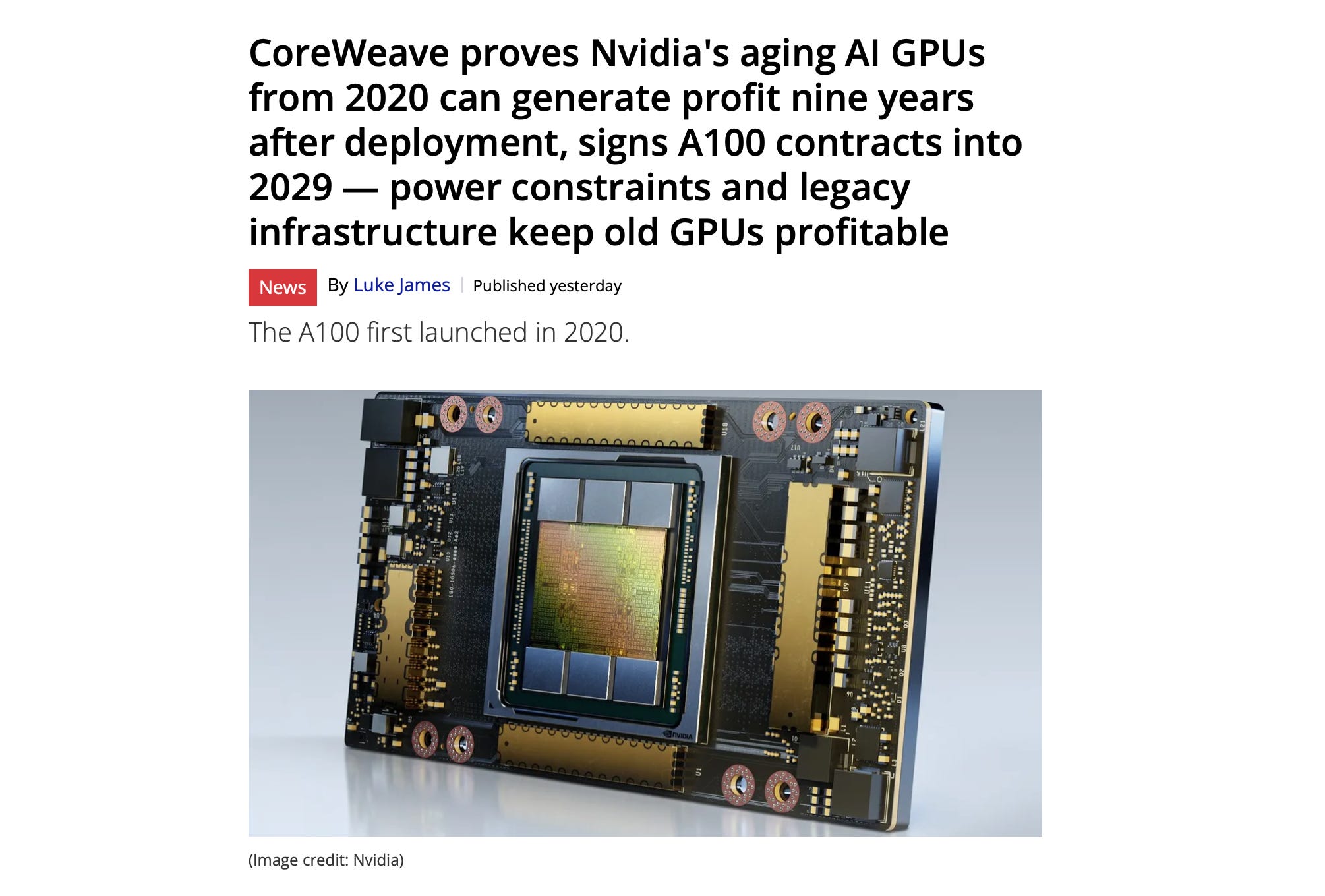
Source: Tom’s Hardware
This completely reshapes the landscape for how we view the lifecycle of compute. The A100 first launched in 2020 and is now yielding demand into 2029. The main skepticism surrounding neoclouds was the depreciation of that compute. Below is the bear case drafted around four main areas.
NVIDIA ships new compute roughly once per year — making the competitive window relatively small
Current depreciation cycles are 4-6 years. Michael Burry claims that this cycle is too long, resulting in hyperscalers understating depreciation by $176 billion from 2026-2028.
This creates a negative lull. If this is true and depreciation is being understated, then the real “earning-life” of compute is much shorter than the “accounting-life” represents.
What makes this bear case worse is that the compute is actually used as collateral in a lot of debt agreements. Overstating the useful life assumes the assets are worth less than the deal implies, making refinancing a headwind.
The rates for the A100 deal were not disclosed, although CEO of CoreWeave Michael Intrator stated the deal was landed at an “attractive price” and “full-freight.” Alongside other AI clouds, CoreWeave has the ability to charge more than average neocloud per MW of capacity, due to their deep cloud integration and mastery of cluster orchestration. (still cheaper than hyperscalers)
Per SemiAnalysis’ ClusterMAX ranking, CoreWeave is the only Platinum AI infrastructure provider, with Nebius being placed in the “Gold Tier” above almost all AI clouds…
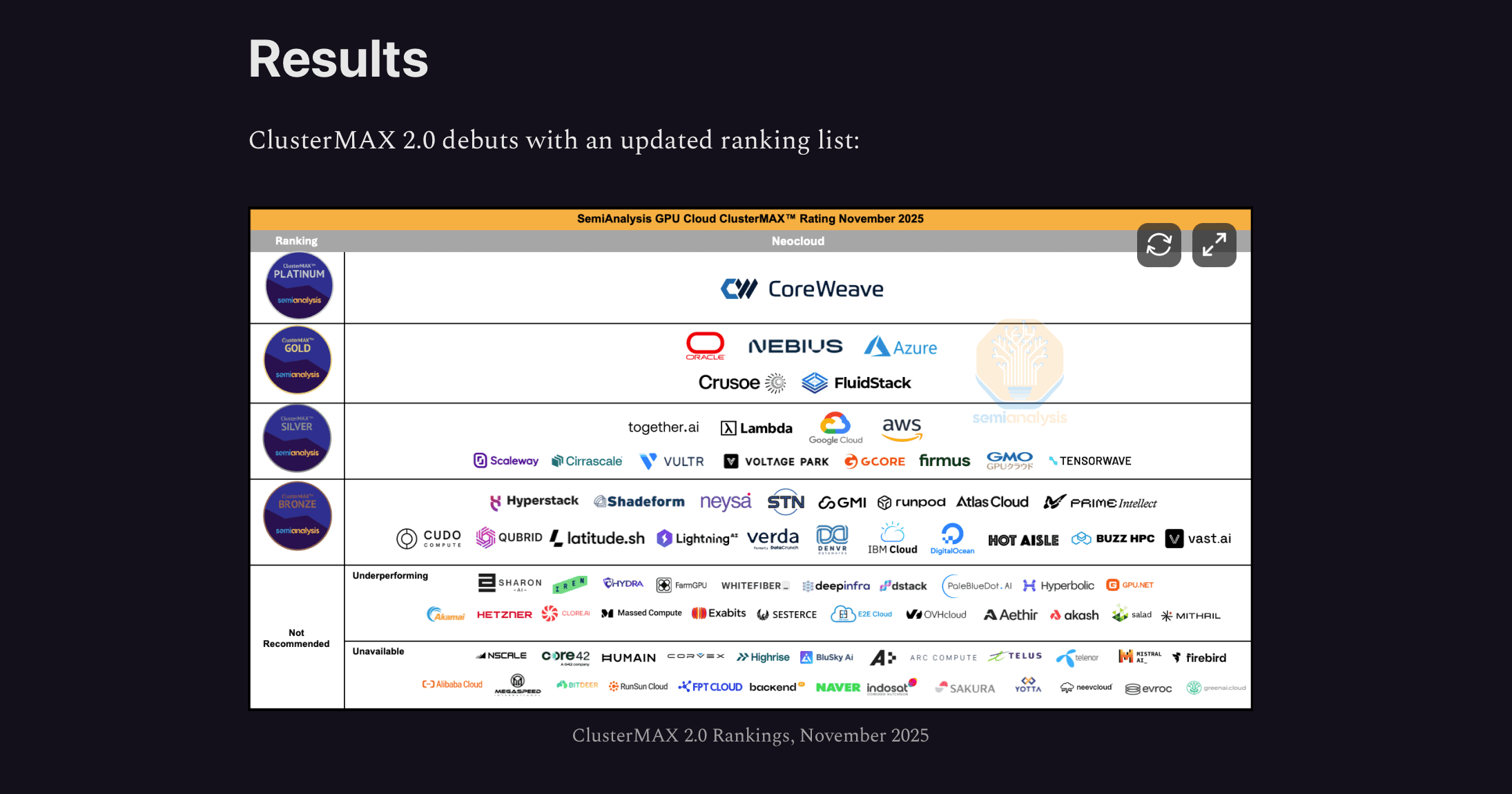
Source: Semi Analysis ClusterMAX
Aside from inference orchestration, the pricing curve of compute is following a directional uptrend for all GPUs stretching from A100’s to B200’s. The CoreWeave deal validates the useful life of GPUs, but the question was always about its economic life. A chip’s economic life is equal to its Utilization x Price. Michael Intrator stated on the earnings call that CoreWeave is largely sold out of prior generations of NVIDIA GPUs. This evidence of maximum utilization isn’t unique to CoreWeave. It’s stretching across the entire industry. Neoclouds and Hyperscalers alike are selling out of compute capacity across their entire fleet.
Many companies like Meta and SpaceX realized the economic value in legacy GPUs and decided to sell them to third parties who are in need of more compute. The increasing economic value is evident through the continuous uptrend in GPU spot rates. The chart below, pulled from Silicon Data, showcases the rise in H100, A100, H200, and B200 GPUs across Non-Hyperscaler fleets from January to August 2026.
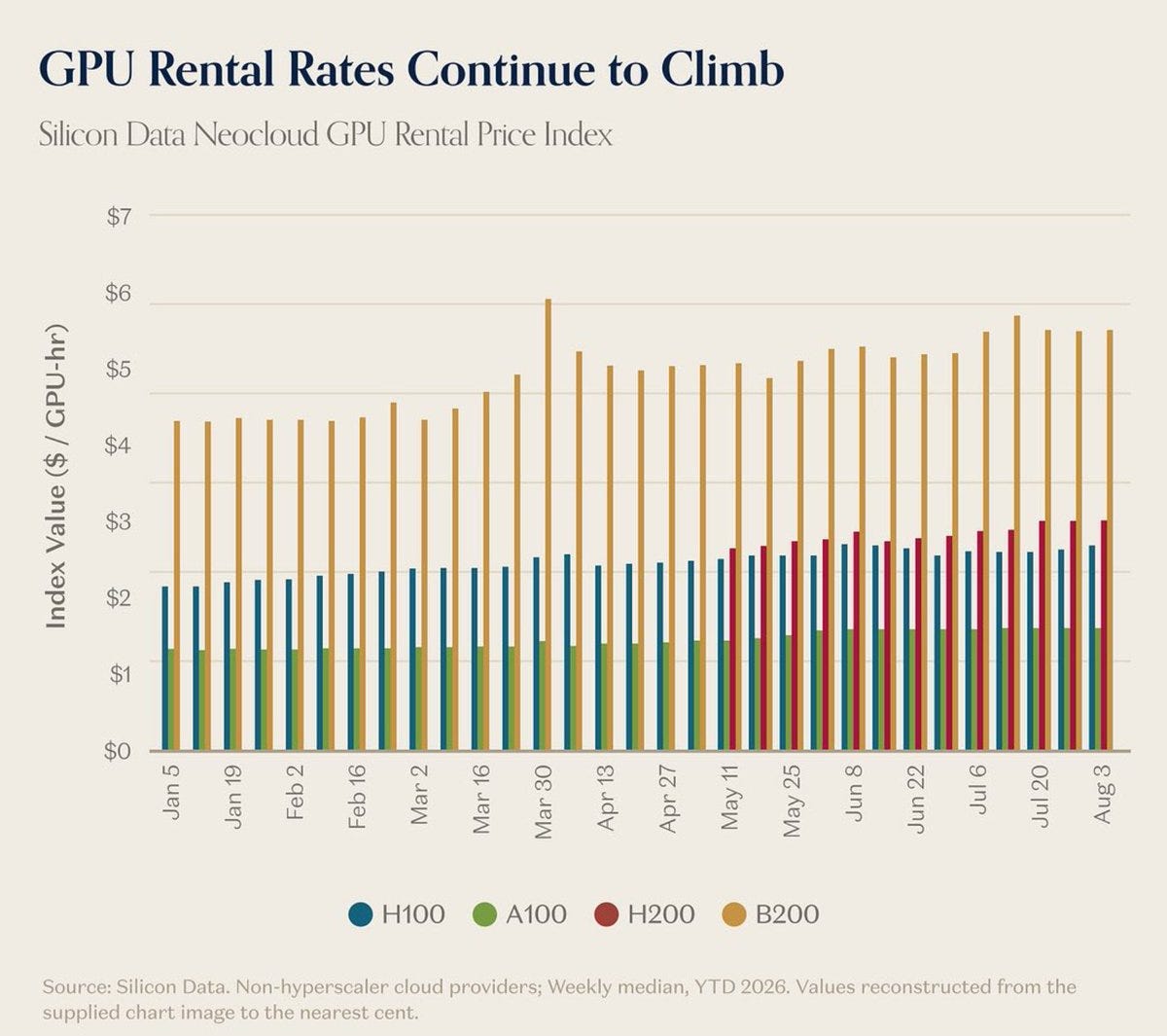
Source: Silicon Data (Ricky Ho on X)
Inference/Agentic workloads enable this to happen across the entire industry, stretching the bottleneck across all GPU’s. Maximum utilization multiplied by increasing spot rates leaves us with an economic life representative of a longer-term product, and not of one Burry describes.
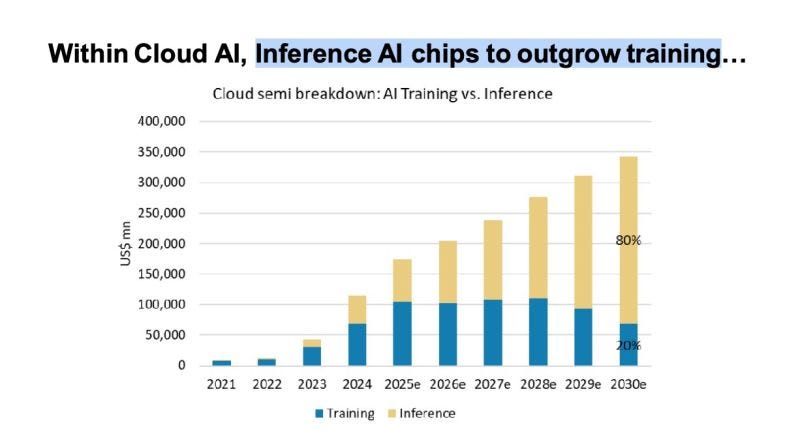
Rebuking Burry: Nebius/CoreWeave Say Otherwise
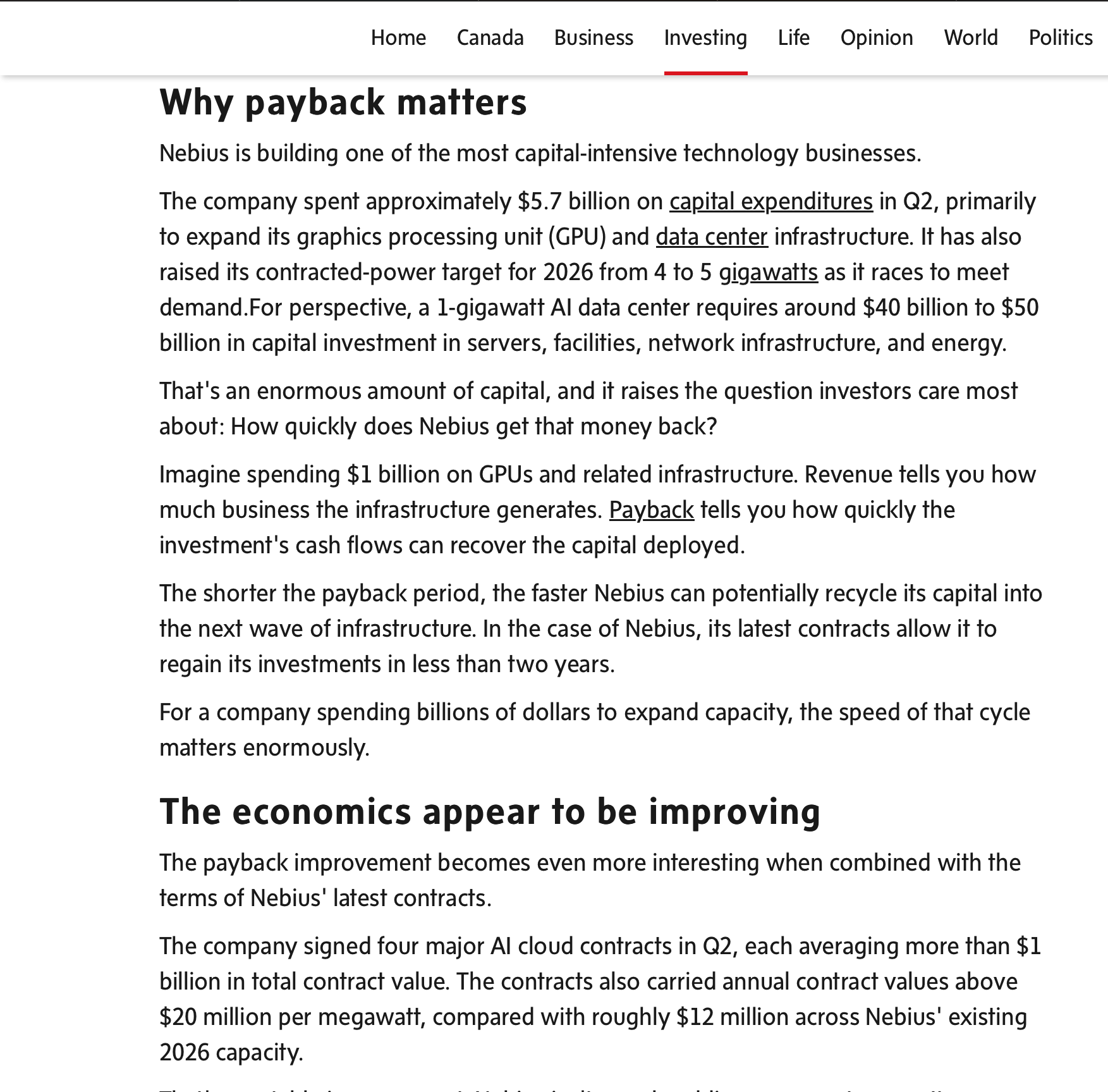
Michael Burry’s entire claim is that chips’ economic life is much shorter than the accounting life indicates. The data released this month actually point toward the opposite. They showcase how fast these assets create value and return cash. One of the most revealing artifacts is Nebius’s Q2 Payback Period. They stated their data centre deals signed in Q2, return all invested cash within 1 year and 10 months, even after they extended their server and network equipment useful life to 5 years from 4.
Source: The Globe and Mail
Why is this important, you may ask? The Globe and Mail argues that Nebius is undergoing a structural shift, and the Payback Period is evidence. Existing 2026 capacity is contracted at $12 million per MW, with the 4 deals signed in Q2 valued at $20 million per MW. At roughly $20 million in revenue, with 50% EBITDA margins against $25-$30 million in Capex per MW, it would take roughly 3 years to return all invested cash. Nebius’s own management states 22 months, meaning variables are in play, making this much shorter than the 36 months we just calibrated. (The cost per MW could be cheaper than the $30 million assumed, customer prepayments could be helping fund this buildout, margins are much higher than 50%, etc.) Even using the 36-month payback period figure, it still sits against an accounting life of 5 years at Nebius. Meaning all the cash invested in the capacity gets returned in 3 years against a 5 year book-life. In layman’s terms, the economic life is very strong and is evidence against Michael Burry’s claims…
Because of this data, I believe an argument can be made that the economic life is actually being understated relative to the accounting life. As referenced above, compute is becoming more and more ‘‘in-demand” with customers acting desperate for it. The trend for the “economic life” of compute is following a linear path. We saw the first signs in 2025 when CoreWeave CEO Michael Intrator said a batch of H100’s, after an expiring contract, were immediately re-booked at 95% of the original price. At the time, three-year-old compute was still lucrative, generating 95% of the book value, even after 3 new chip lines were released. The industry is following a trend that’s continuously getting strengthened. Older compute is still lucrative and in high demand. The economic life of these chips is getting more and more valuable, contrary to Burry’s entire bear thesis.
My Takeaways:
In conclusion, the data is signalling a shift in the industry; legacy GPU economics are strengthening, due to increased prices and utilization rates. Nebius and CoreWeave’s earnings validate this direction; the cash needed to fund the DC buildout is being returned faster than the accounting life assumes, and those very assets are showing a longer economic life.
Nebius especially is proving to be the strongest neocloud. For instance, their balance sheet is by far the best when compared to other public companies of their scale; they also have very strong software orchestration, inference management, proprietary token optimization technology, and a deep-knitted partnership with Nvidia.
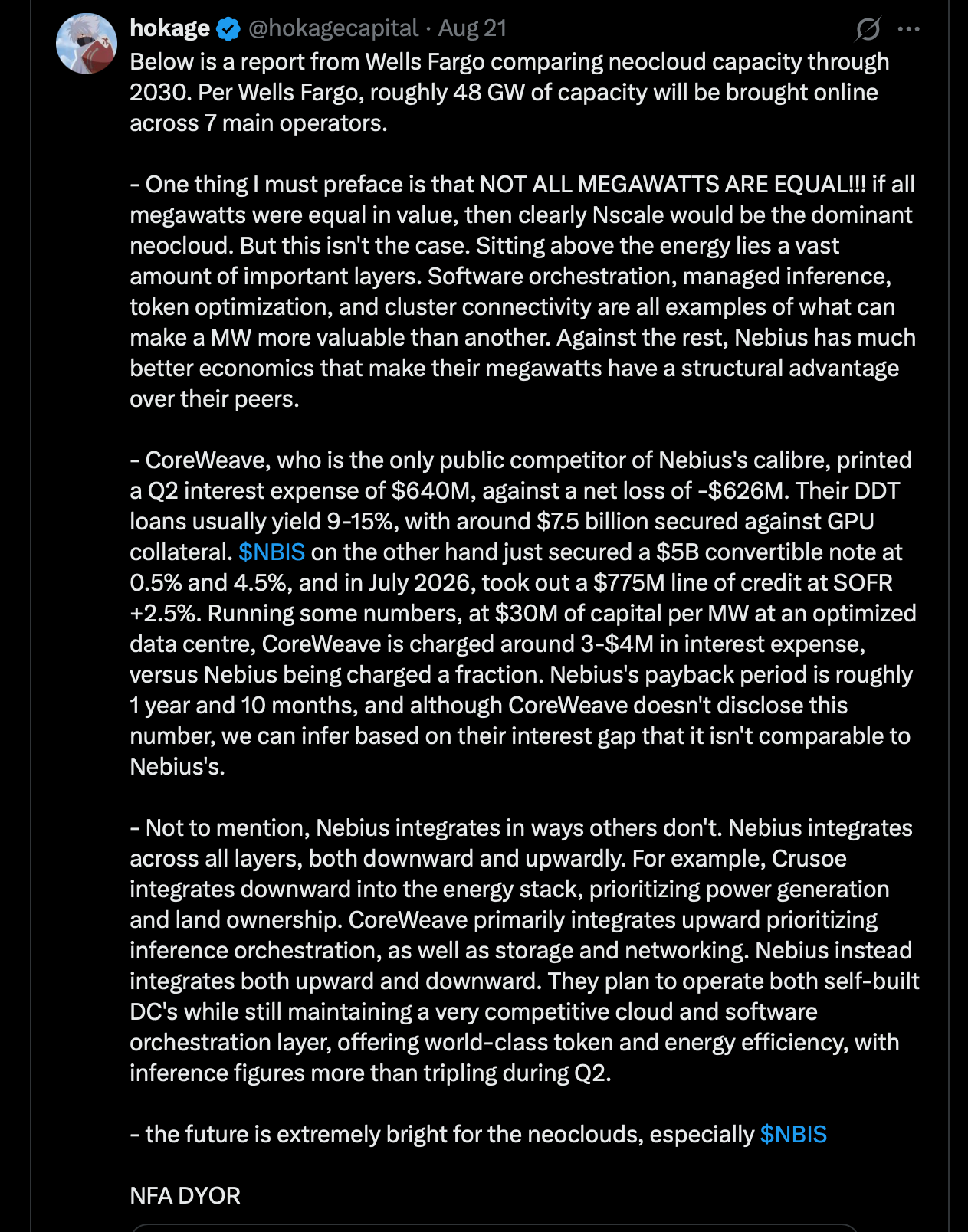
Source: Hokagecapital on X
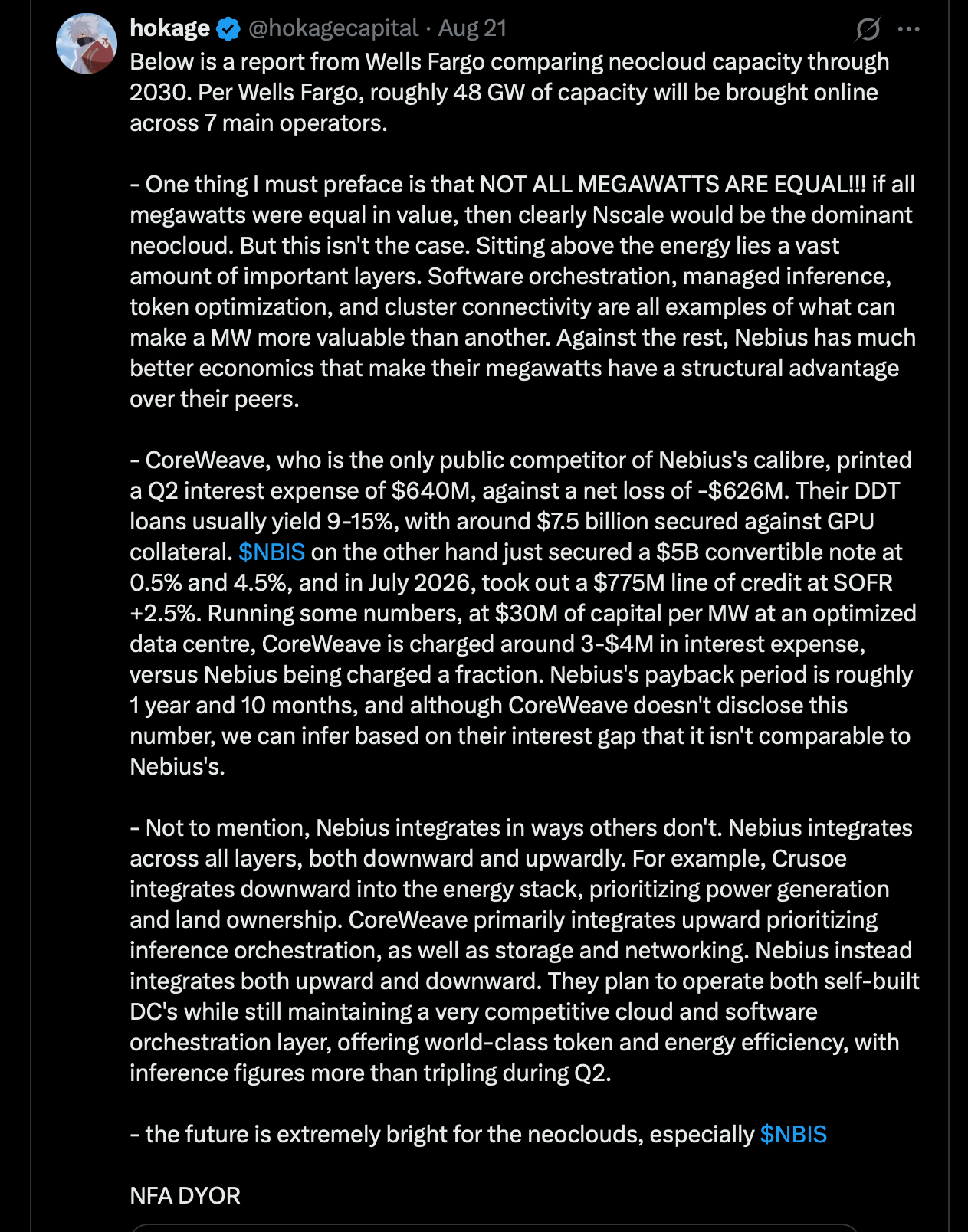
(I urge all of you to read the post above; it greatly summarizes the debt situation across comparable neoclouds, and why Nebius is in the best situation… NOT ALL MEGAWATTS ARE THE SAME!!!)
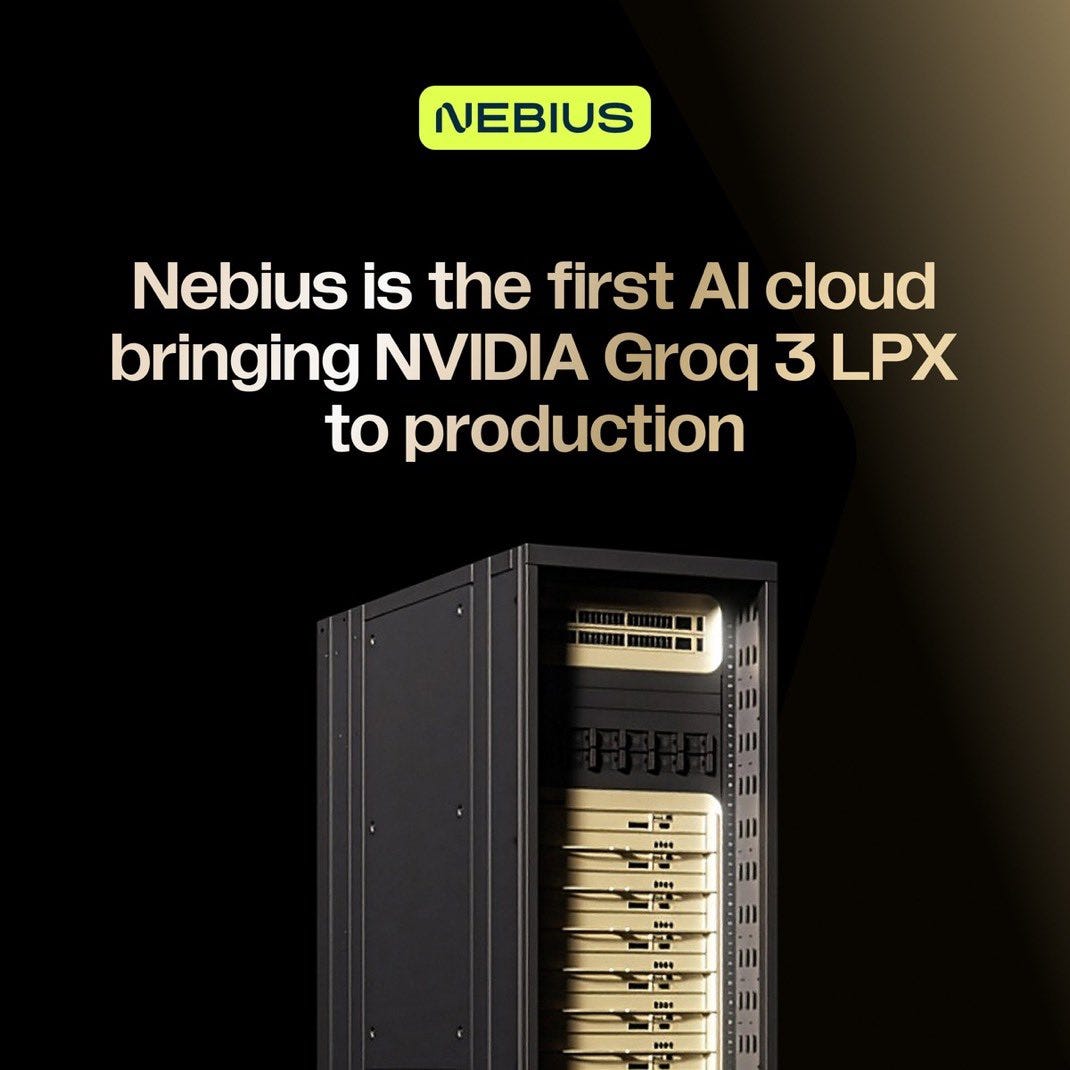
Nebius’s partnership with Nvidia is another reason as to why I tend to favour them in the future. The main Nvidia-backed neoclouds such as CoreWeave and Nebius get early access to Vera Rubin at the same time. Nvidia strategically uses their neocloud ecosystem as a mode of “deployment” of their compute, to create pricing power and scarcity. (Artificially making Nvidia into a hyperscaler!) But what’s interesting is who acquired the LPX rack first. You’d assume all neoclouds would get the Groq rack at the same time, but one neocloud stands out as the preferred choice.
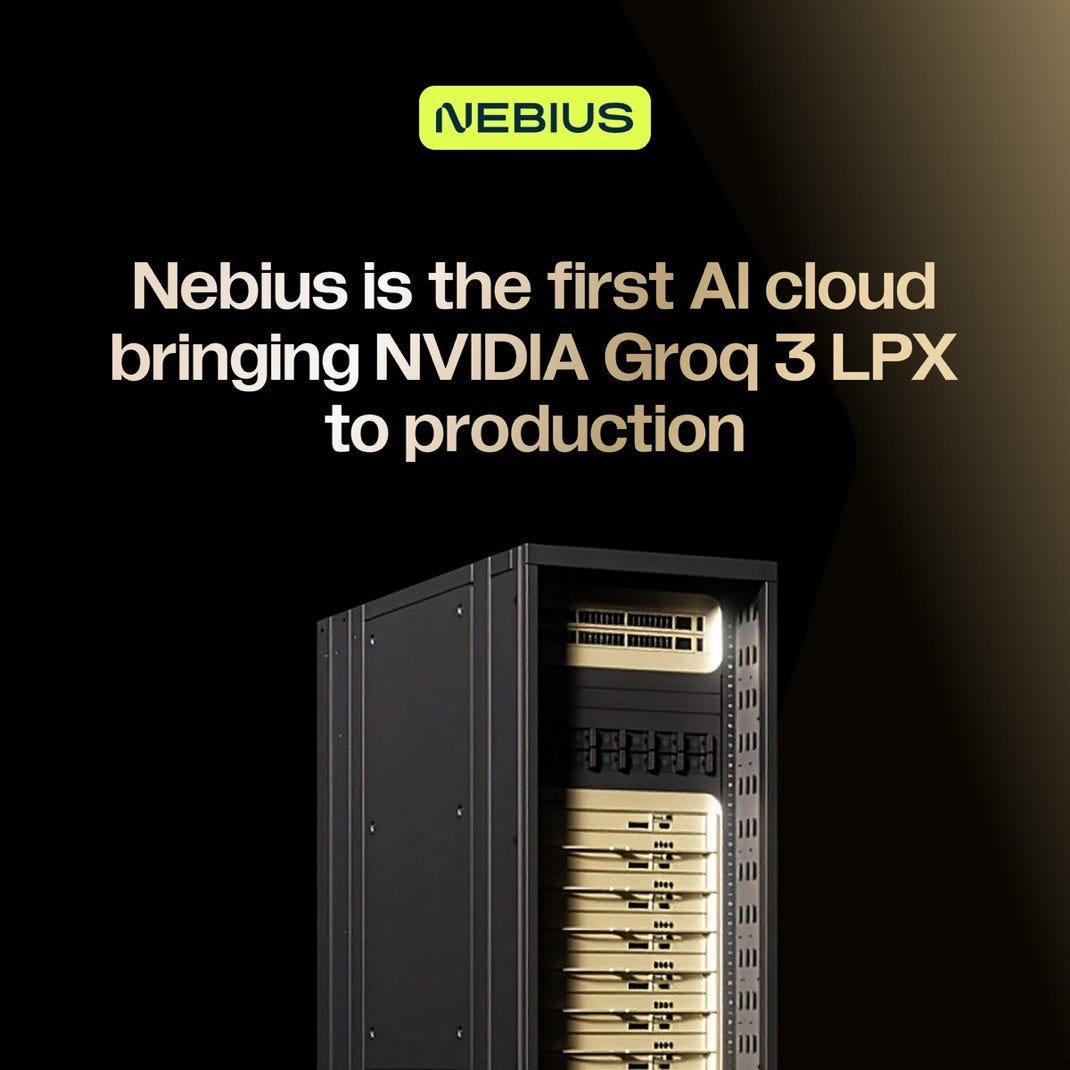
You read it right. Nebius is the first AI cloud bringing the LPX rack to market. Now, this isn’t simply just a “luck of the draw moment” in which Nebius was chosen; it was a strategic deployment by Nvidia, proving my theory that Jensen prefers Nebius for inference and agentic orchestration.
The LPX rack is designed for disaggregating the prefill/decode process, being completely optimized for token delivery and inference management. From this decision, I can infer that Nvidia views Nebius as the best neocloud for delivering world-class inference through Nvidia-based infrastructure. This is genuine proof of a relationship that is getting deeper. This deeper partnership is extremely bullish for Nebius, and improves the probability that Nebius can become a competitive “neoscaler” in the coming years.
Overall, the neocloud thesis is materializing. Demand for MW capacity, legacy compute, and AI-optimized clouds is exploding. We are in the early innings of this thesis and are yet to see the best of what can come from these companies.
I hope you all enjoyed reading this as much as I enjoyed making it… Subscribe for more!
DISCLAIMER:
This publication is produced by Aria Research and is for informational and educational purposes only. It does not constitute financial, investment, legal, or tax advice, and it is not personalized to your individual circumstances, financial situation, or risk tolerance. Nothing in this publication is a recommendation, offer, or solicitation to buy or sell any security or financial instrument. The author may hold positions in the securities discussed. All investments carry risk, including the possible loss of principal, and past performance is not indicative of future results. All analyses and views are the author’s own, and readers should independently verify any data before relying on it. The information here is believed to be accurate as of the date of publication, but it is not guaranteed to be complete or error-free. Always conduct your own due diligence and consult a licensed financial advisor before making any investment decision.