
Executive Summary
A few years ago, the AI trade was dominated by compute. Companies couldn’t get enough of it. The clear winner? Nvidia. They made the best product tailored to training LLM’s like ChatGPT and Claude. From there, the shift went from training AI to implementing it at the enterprise level. This shift is called Agentic AI, and this is the future. It allows businesses to have artificial agents work alongside employees to streamline operations. Whether it be scanning basic IT tips, reading charts, and analyzing data, these agents can perform tasks effectively.
The caveat is that agentic AI is creating a vast amount of demand for the entire AI stack. That being semi conductors, high-bandwidth memory, NAND storage, advanced packaging, chip fabrication, cloud services, and data centres. The issue is that demand is so strong for the stack that supply simply cannot keep up. The CPUs, GPUs, storage, and memory are being placed into data centres in order to store, process, train, and implement advanced AI models and agents. This is where the bottleneck lies.
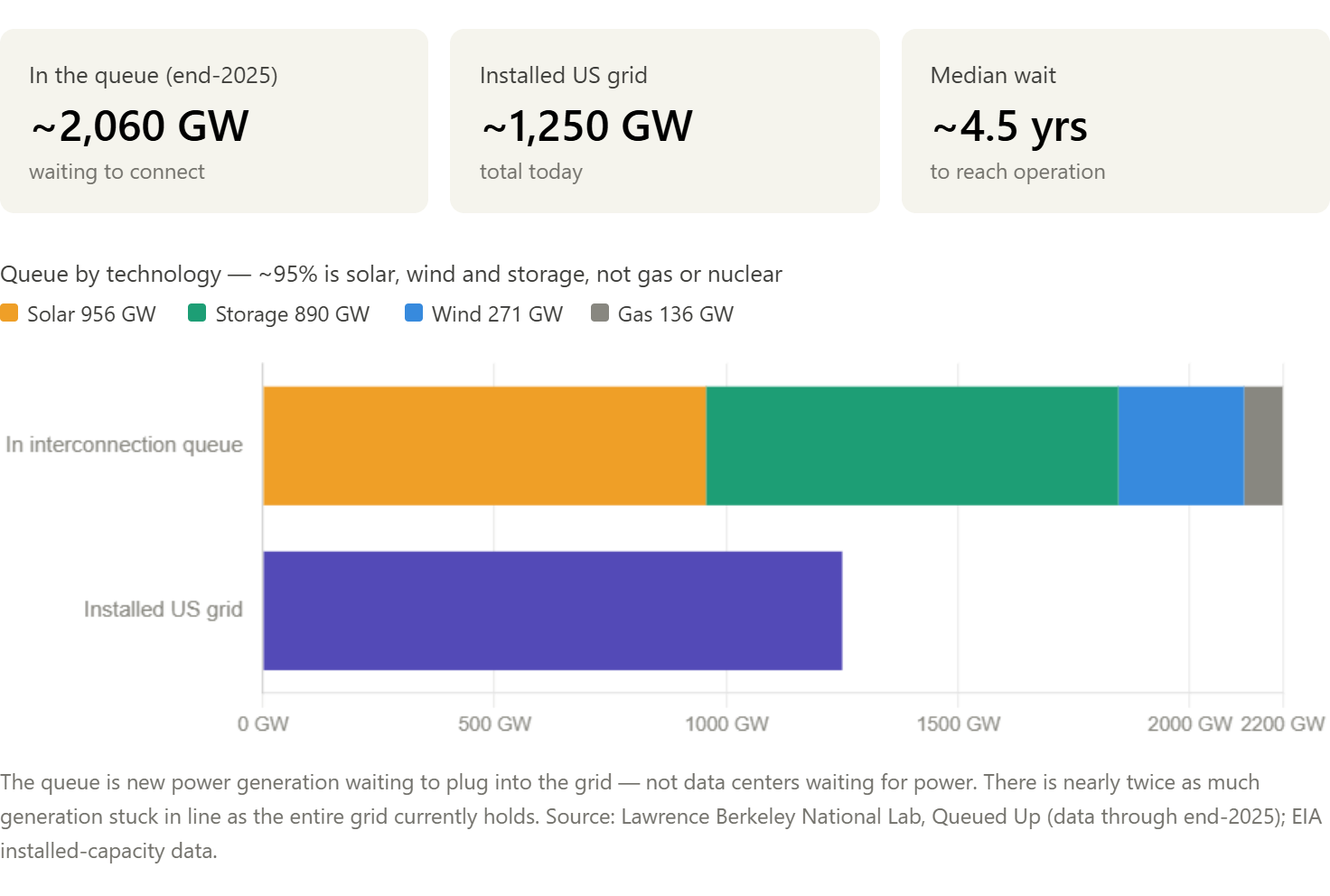
The demand for data centres is so vast, and the main players in this trade are all expanding capacity. Albeit, it takes 2+ years from ground being broken to having a fully functioning data centre. These data centres can consume as much power as a small city. Lead times to get energy are sitting at 4-5 years, as grid interconnections are severely backlogged. Everyone is desperately trying to get power, but they simply can’t. There is roughly 2,000+ gigawatts of backlogged energy from interconnections that won’t come online until 2030-2033 (as of May 2026). There is more energy backlogged than the entire United States Grid has online currently.
This leaves hyperscalers and AI companies with two options.
They can wait patiently to have more capacity come online, and risk missing out on revenues and potentially falling behind in the “AI race.”
They can purchase capacity from third-party vendors who offer it.
This is where the thesis of our memo comes in. Neoclouds like Iren and Nebius are well-positioned to benefit from capacity scarcity and the overall energy bottleneck. Iren, formerly known as Iris, used to be a bitcoin mining company. They own the full stack, meaning they own the land, the data centre, and the compute within it. Iren has 4.5+ GW of secured capacity, which can power roughly 4.5 million average homes. Due to their past, they locked in grid capacity at low premiums and are able to rent it out to companies at a larger premium.
Nebius, on the other hand, was formally the international division and Dutch parent company of Yandex, known as the “Google of Russia.” After the Ukraine war began, they sold all of their Russian assets and pivoted to being a full-scale artificial intelligence company. Similar to Iren, they currently rent their capacity. These two companies alike can benefit immensely from the energy constraint that will be plaguing hyperscalers and blue-chip companies begging to win the AI race.
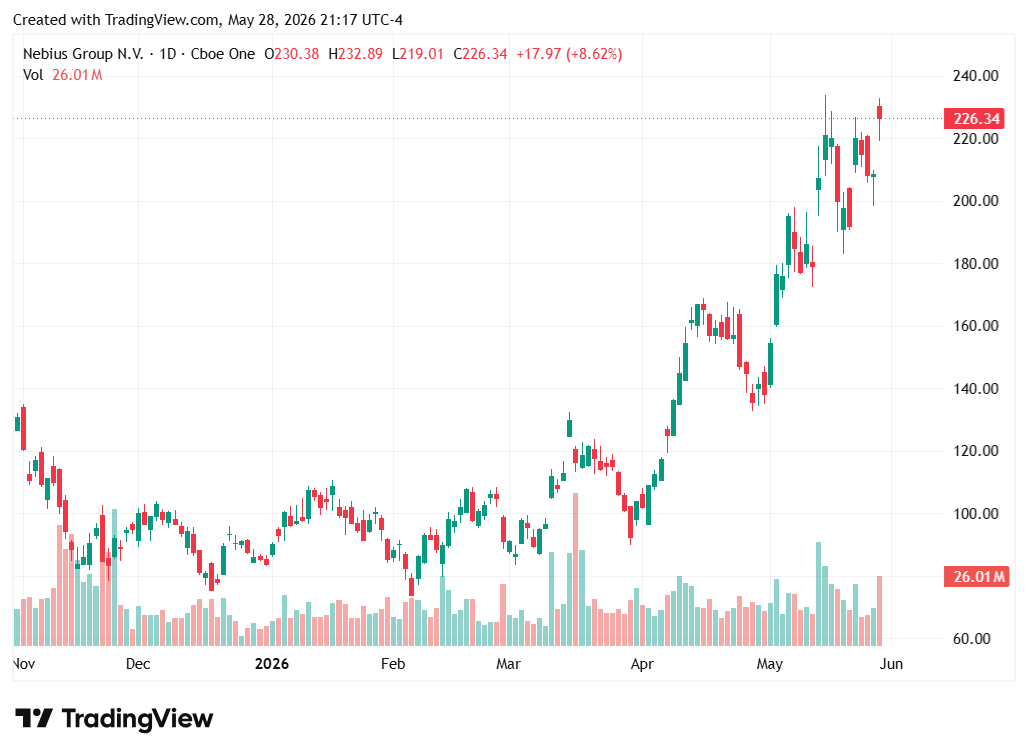
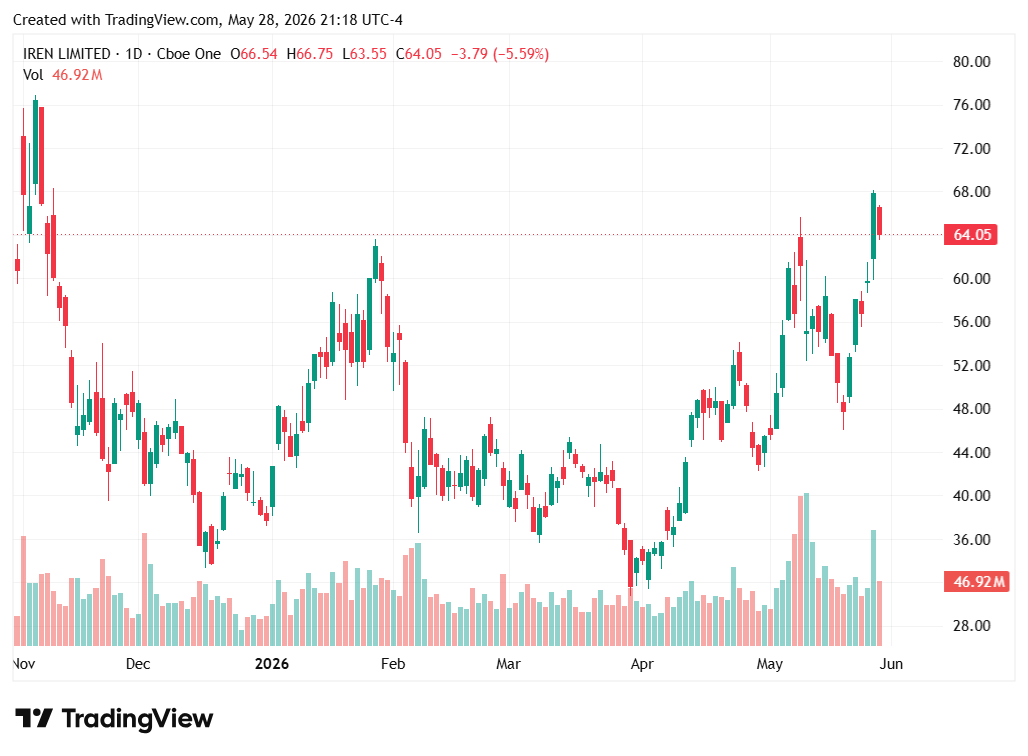
The Following displays Nebius and Iren’s Market Price at the time of this Memo…
Pillar 1: The Grid Constraint Explained
The expansion of data centres and the need for agentic workloads will only constrain the grid further. Every data centre turned online requires roughly 20-100 megawatts of power (0.02-0.1 gigawatts). This is enough to power 10,000-100,000 households. One data centre being deployed uses as much energy as a small city. This is clearly a problem, especially when the United States grid can support only 1,250 Gigawatts of energy as of today. As mentioned above, around 2,000 gigawatts worth of backlogged energy will be deployed fully between 2030-2033, as a mix of solar power and renewable sources, nuclear, and gas turbines, in order to support the expansion of artificial intelligence.
Lead times stretch from 4-5 years, as the queue to acquire power is extensively backlogged. The simple answer. Interconnections.